OpenCTI 101: Foundations
A foundations course for Filigran's threat intelligence platform, rebuilt from book-length reading material into scenario-based elearning. Published November 2026.
The source was eight lessons of core reading with a midterm. It was thorough, and it asked learners to read. My job was to turn it into a course a new user would finish and could use.
I wrote the goal first: given a realistic situation, a learner can tell the platform's core concepts apart and choose the capability that fits. This is a course about what you need to understand before you start using the product, taught inside the product.
- My role
- Instructional design, writing, visual direction, and build
- Audience
- Cybersecurity professionals who are new to OpenCTI
- Format
- Six self-paced modules, a gated knowledge check, and a capstone simulation
- Tools
- Articulate Rise 360, Storyline 360, Review 360, SCORM 2004
Play the course
All six modules, the knowledge check, and the capstone open right here, with no account and no sign-up. Progress isn't tracked or saved.
-
3. Seeing How It ConnectsThen take The Handover Review, the 14-question knowledge check.
-
Capstone: The Thursday BriefA case to investigate, with a recommendation to make at the end.
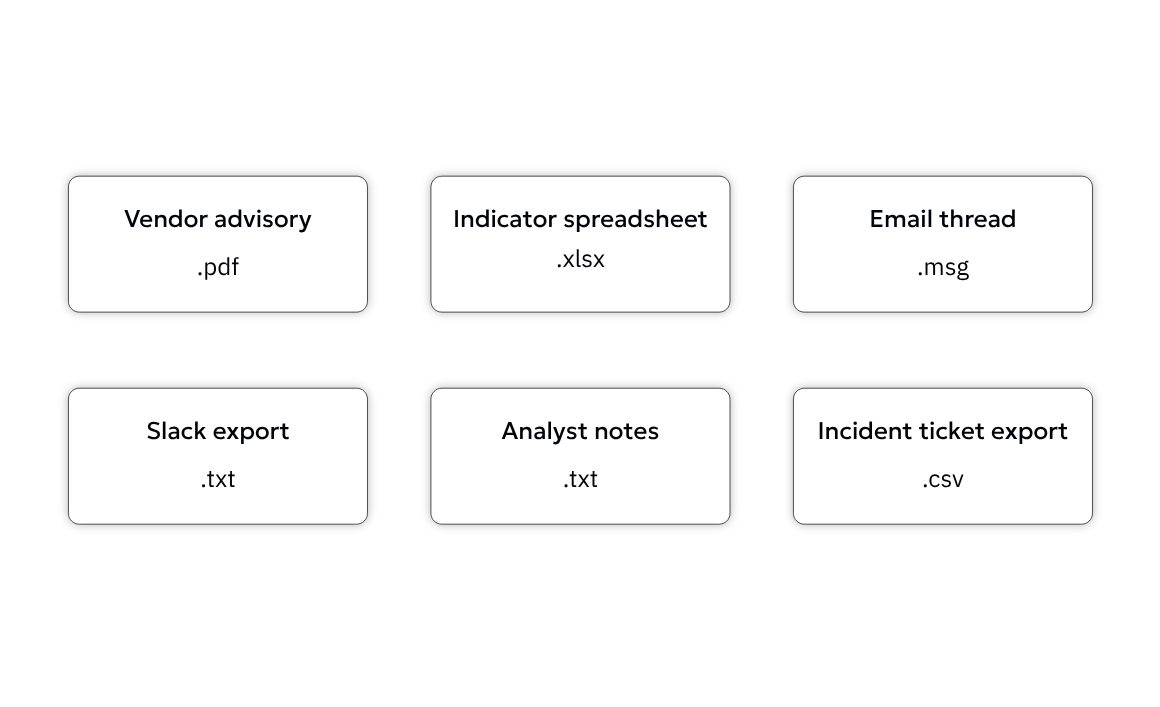
The thumbnails sketch the idea that runs through the course. Module 1 opens on six pieces of information with nothing between them. Each module adds connections. Arrowheads appear from Module 3, the module about relationships.
Decisions that shaped it
- Start where customers get stuck
- Before designing anything, I built an AI agent to read more than 500 support tickets. The recurring problem was gaps in concepts, and that shaped the redesign.
- Structure before sentences
- The objective, module sequence, activity types, and assessment strategy were settled before I wrote any learner-facing copy.
- Teach the distinctions
- Product knowledge is taught as skills: telling similar things apart, applying a concept, following a rule, knowing the exception. Module 2 is built around entity types that look alike, such as a threat actor and an intrusion set.
- One scenario, start to finish
- Every module takes place at the same fictional regional bank, in the learner's first days on its threat intelligence team. Each one closes with a Thursday threat review that sets up the capstone.
- A fixed kit of seven activities
- Seven activity types, reused throughout. No new type appears after Module 3, so learners spend their attention on the content and not on a new mechanic.
- Custom builds only where they teach
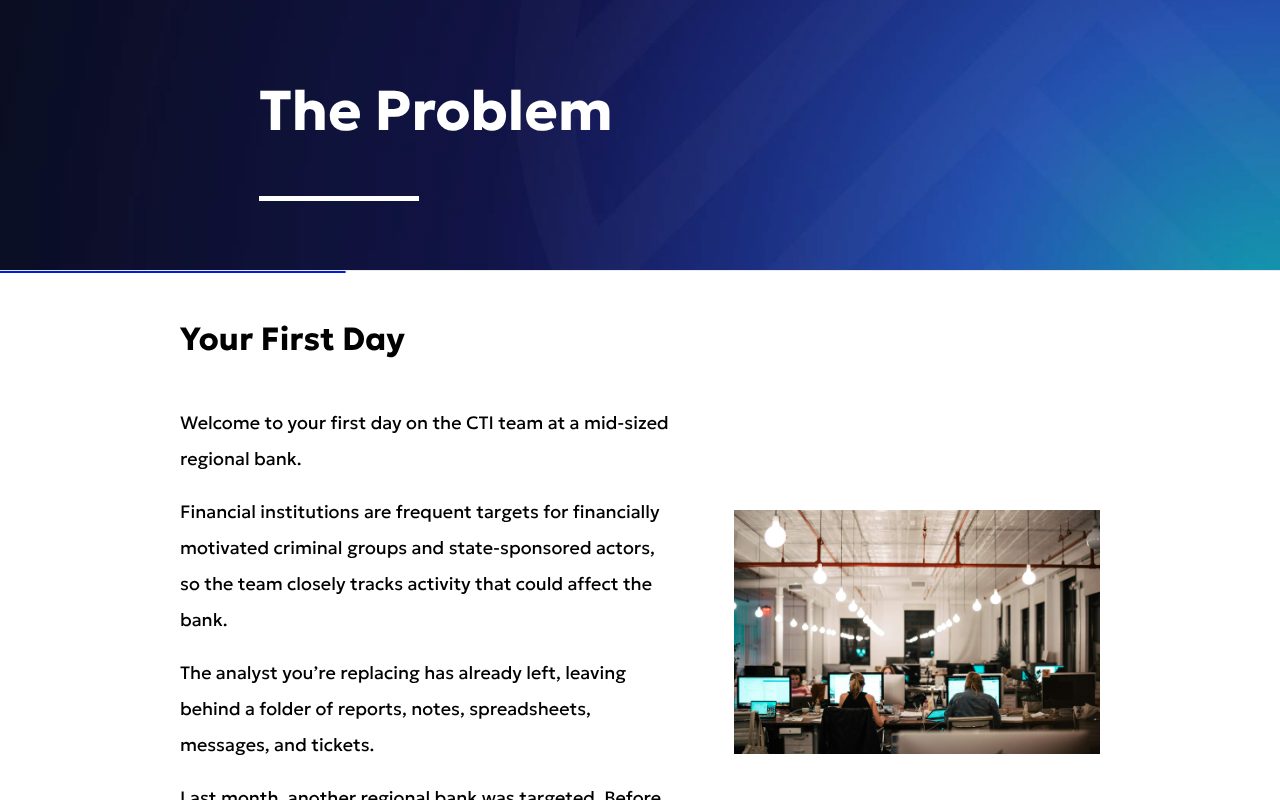
- Rise blocks are the default. Storyline appears only where branching, simulation, or a change of state improves the learning. In Module 1, the learner inherits six handover files and finds there is no right one to open, because nothing connects.
- Real screenshots, checked by hand
- Product visuals are cropped screenshots, never redrawn approximations. I verified navigation, field names, and terminology in a live instance.
- Assessment that means something
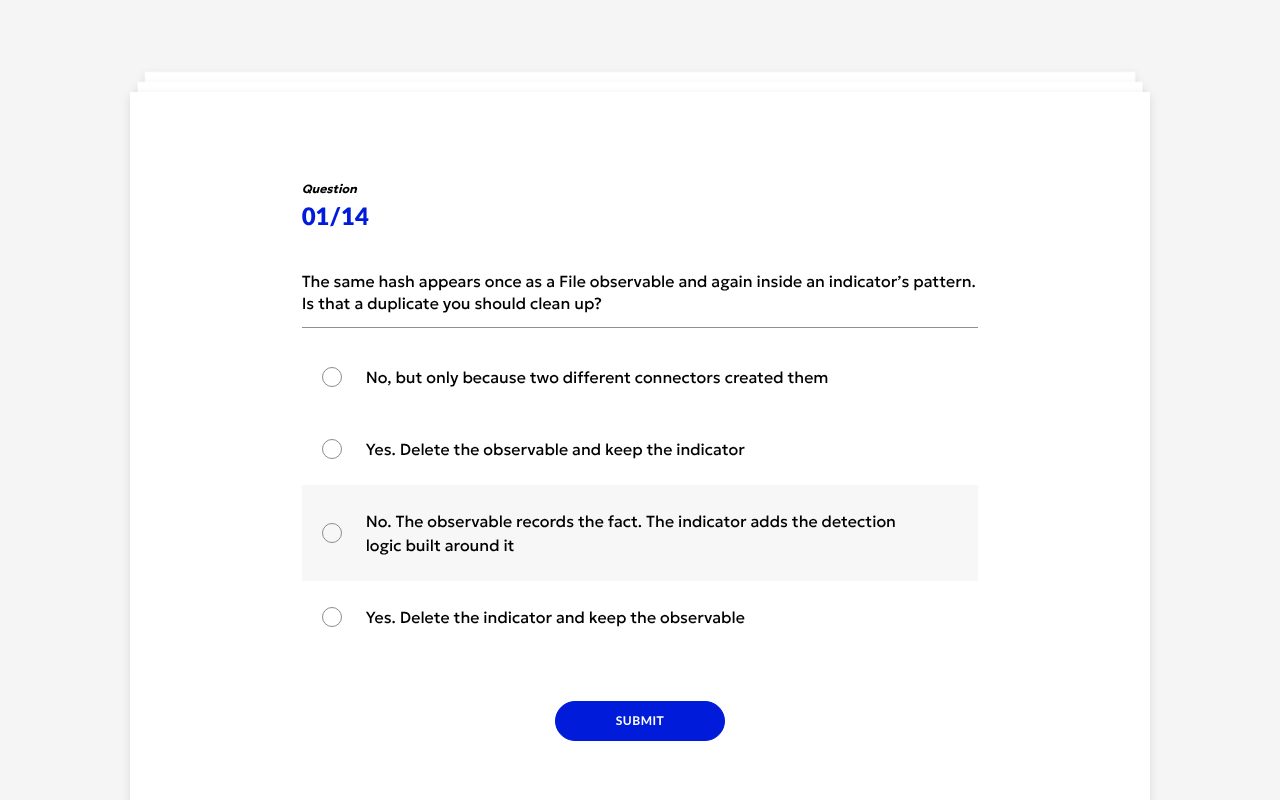
- A 14-question knowledge check gates Module 4 in the Academy, with unlimited retakes. The capstone holds its feedback until the attempt is finished, because the certificate is a claim about competence.
- Experts review the real thing
- Experts won't read a long document any more than learners will. I sent them modules as close to finished as possible, one or two at a time, and kept my questions few and pointed.